| Plate
|
-
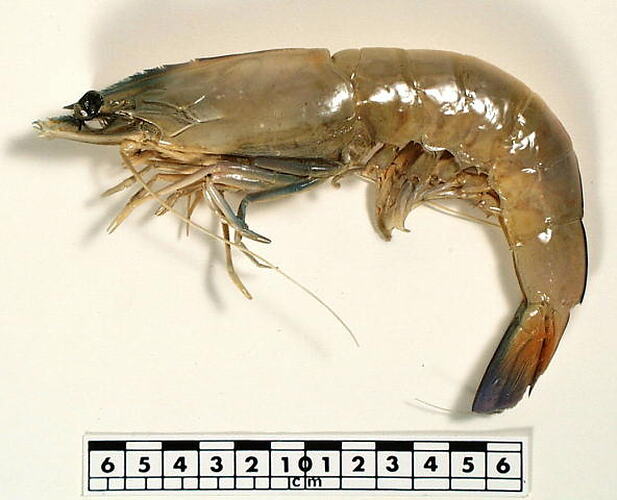 © Museums Victoria, CC BY 4.0, via Wikimedia Commons · CC BY 4.0
|
-
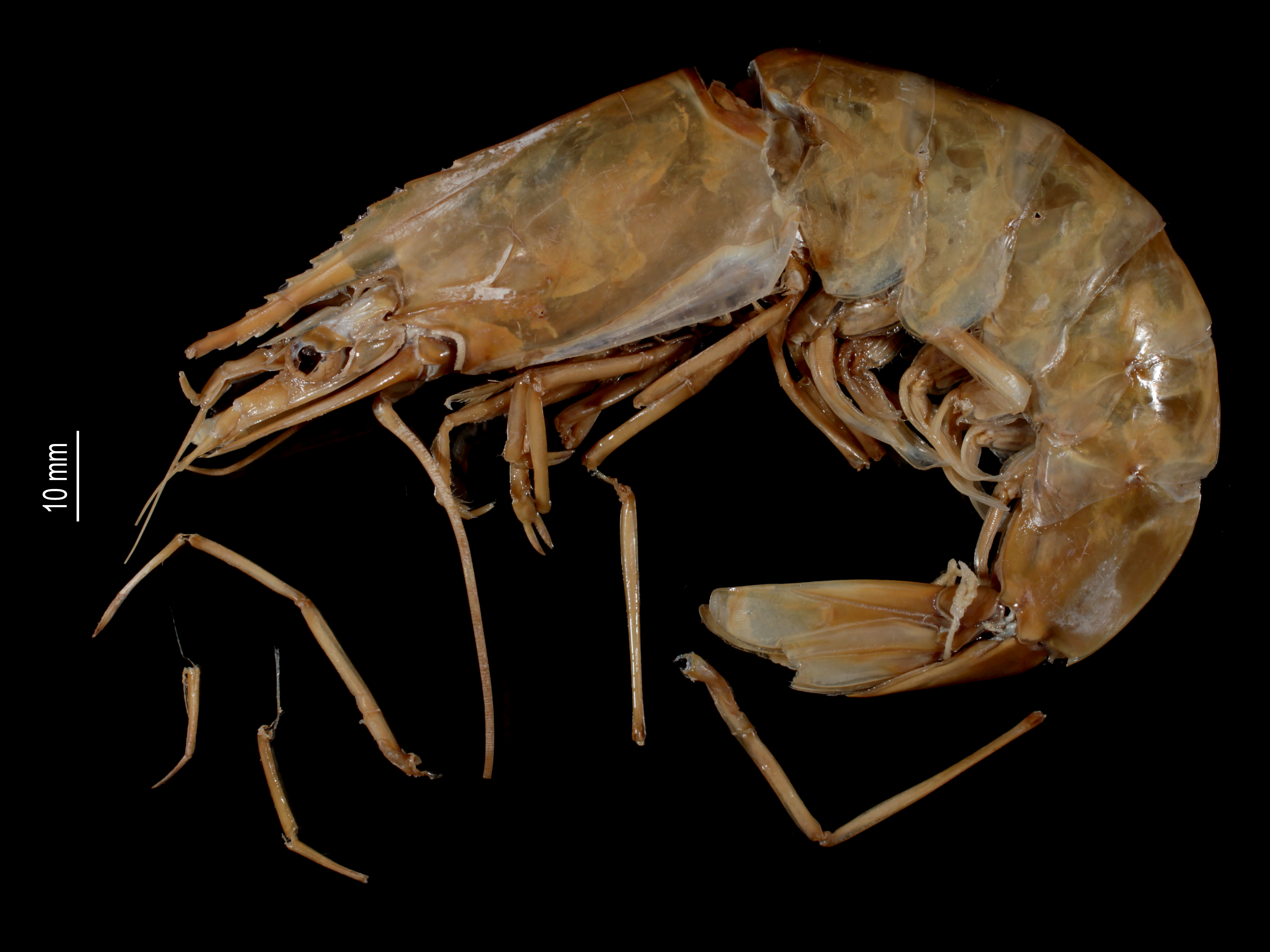 © Laura Flamme; MNHN, CC BY 4.0, via Wikimedia Commons · CC BY 4.0
|
Each has its own |
| Stable identifier
|
|
|
Each has its own |
| Taxonomic rank
|
|
|
Same |
| Authority and year
|
|
|
Differs |
| English name
|
The register holds no verified English name for this taxon.
|
-
Indian prawn
-
Indian white prawn
-
Indian white shrimp
-
white prawn
|
Only the second has a record |
| Nationally approved Arabic name
|
No nationally approved Arabic name exists for this taxon; verified local names are shown in the next two rows, as what they are.
|
No nationally approved Arabic name exists for this taxon; verified local names are shown in the next two rows, as what they are.
|
Neither has a record |
| Local name — Red Sea
A name recorded for this sea; it is not an occurrence record. |
No verified local name is recorded for the Red Sea.
|
No verified local name is recorded for the Red Sea.
|
Neither has a record |
| Local name — Arabian Gulf
A name recorded for this sea; it is not an occurrence record. |
No verified local name is recorded for the Arabian Gulf.
|
No verified local name is recorded for the Arabian Gulf.
|
Neither has a record |
| Family
|
|
|
Same |
| Order
|
|
|
Same |
| National code
|
This record carries no national code.
|
This record carries no national code.
|
Neither has a record |
| Measured specimen length
The length of a measured specimen, not the maximum length of the species. |
The register holds no measured specimen length.
|
The register holds no measured specimen length.
|
Neither has a record |
| Published conservation status
|
No conservation assessment is published for this record.
|
No conservation assessment is published for this record.
|
Neither has a record |
| Distribution
|
-
Saudi Arabian Gulf coast: preserved specimens held by the Smithsonian National Museum of Natural History (USNM) and published through GBIF, among them Safaniya (north of Safaniya Hill) (1982), Jurayd Island (north-east end) (1981), Abu Ali Island (1971). The GBIF records give Isabel Pérez Farfante as the determiner. Museum specimen records: not an estimate of abundance and not a statement about the species today.
Saudi territorial waters, Arabian Gulf
Reference 120 — Occurrence record · verified
the evidence is a rendering of what the locator holds, not a verbatim quotation
Reference 121 — Occurrence record · verified
the evidence is a rendering of what the locator holds, not a verbatim quotation
Reference 122 — Occurrence record · verified
the evidence is a rendering of what the locator holds, not a verbatim quotation
-
According to the FAO sheet (1983): within the area from south-east Africa to the Gulf of Oman and the “Gulf”, the Red Sea, Madagascar, Mauritius, La Réunion and Seychelles; also the southern coast of India and Sri Lanka; further east from Burma to Korea and Japan, New Guinea, Australia and Fiji. A regional statement; the Saudi Gulf record of the species is the specimens named above.
Reference 110 — Penaeus (Melicertus) latisulcatus sheet: geographical distribution · verified
the evidence is a rendering of what the locator holds, not a verbatim quotation
|
-
Species composition of the survey catch: Penaeus indicus 2,860 individuals, 3% by number of 103,758.
Saudi territorial waters, Red Sea
Reference 11 — Results 3.1 · verified
-
According to the FAO sheet (1983): within the area from the south and east African coast to India and Sri Lanka, including Madagascar and the Red Sea, but “possibly absent or very rare in the Gulf of Oman and the Gulf”. A regional statement; no range on the Saudi Gulf coast is attributed to the species.
Reference 110 — Penaeus (Fenneropenaeus) indicus sheet: geographical distribution · verified
the evidence is a rendering of what the locator holds, not a verbatim quotation
|
Differs |
| Morphology
|
-
According to the FAO identification sheet (western Indian Ocean, 1983): carapace smooth; rostrum with 9 to 12 teeth on the dorsal margin and a single tooth on the ventral margin; gastrofrontal crest present; telson armed with 3 pairs of movable spines; no ischial spine on the first pereopod. Colour: body pale yellow to brown; dorsal crests dark brown; the pleura of the first 5 abdominal segments each with a short vertical red or brown stripe. A description for the western Indian Ocean (FAO Area 51), not a Saudi study.
Reference 110 — Penaeus (Melicertus) latisulcatus sheet: distinctive characters · verified
the evidence is a rendering of what the locator holds, not a verbatim quotation
|
-
According to the FAO identification sheet (western Indian Ocean, 1983): carapace hairless; rostrum slender and long, with 7 to 9 teeth on the dorsal margin and 4 to 6 on the ventral margin; gastrofrontal and hepatic crests absent. Colour: body pale pink to yellowish, semi-translucent, with olive-green to grey-blue speckles; rostral and middorsal abdominal crests mostly brown. A description for the western Indian Ocean (FAO Area 51), not a Saudi study.
Reference 110 — Penaeus (Fenneropenaeus) indicus sheet: distinctive characters · verified
the evidence is a rendering of what the locator holds, not a verbatim quotation
|
Differs |
| Habitat and distribution
|
-
According to the FAO sheet (1983): found from the coastline to depths of about 80 m, occasionally deeper, on sand or mud, with a clear preference in many localities for sandy substrates; nocturnal, burying in the seabed in daytime and emerging at night to feed. A description for the western Indian Ocean (FAO Area 51), not a Saudi study.
Reference 110 — Penaeus (Melicertus) latisulcatus sheet: geographical distribution and behaviour · verified
the evidence is a rendering of what the locator holds, not a verbatim quotation
|
-
According to the FAO sheet (1983): lives on shelf areas from the coast to about 90 m, most abundant in shallow water of less than 30 m on sand or mud (a slight preference for sandy bottoms); very euryhaline, tolerating salinities of more than 45 in the Red Sea (the unit symbol is illegible in the source copy read); caught by day as well as at night. A description for the western Indian Ocean (FAO Area 51), not a Saudi study.
Reference 110 — Penaeus (Fenneropenaeus) indicus sheet: geographical distribution and behaviour · verified
the evidence is a rendering of what the locator holds, not a verbatim quotation
|
Differs |
| Identity and names
|
-
WoRMS records the name Penaeus latisulcatus Kishinouye, 1896 as a “superseded combination”, its accepted name being Penaeus (Oleopenaeus) latisulcatus; the encyclopedia keeps the genus Penaeus as it does for its other species. Penaeus hathor is a separate accepted species that was originally described as a subspecies of P. latisulcatus.
Reference 14 — AphiaRecordsByName, retrieved 17 October 2026 · verified
the evidence is a rendering of what the locator holds, not a verbatim quotation
|
The register holds no row for this field.
|
Only the first has a record |
| Study sample count
|
The register holds no row for this field.
|
-
2860
Saudi territorial waters, Red Sea
Reference 11 — Results 3.1 (species composition, n = 103,758 individuals, shares by number) · verified
|
Only the second has a record |
| Share of the study sample
|
The register holds no row for this field.
|
-
3 %
Saudi territorial waters, Red Sea
Reference 11 — Results 3.1 (species composition, n = 103,758 individuals, shares by number) · verified
|
Only the second has a record |
| Sources
|
-
Reference 14 — World Register of Marine Species, 2026
-
Reference 110 — FAO Species Identification Sheets for Fishery Purposes: Western Indian Ocean (Fishing Area 51), Penaeidae sheets, 1983
-
Reference 120 — GBIF occurrence 1322872448: Penaeus latisulcatus, Safaniya (north of Safaniya Hill), 1982, specimen of the Smithsonian National Museum of Natural History (USNM), 1982
-
Reference 121 — GBIF occurrence 1320675680: Penaeus latisulcatus, Jurayd Island (north-east end), 1981, specimen of the Smithsonian National Museum of Natural History (USNM), 1981
-
Reference 122 — GBIF occurrence 1321434149: Penaeus latisulcatus, Abu Ali Island, 1971, specimen of the Smithsonian National Museum of Natural History (USNM), 1971
|
|
Differs |