| Plate
|
-
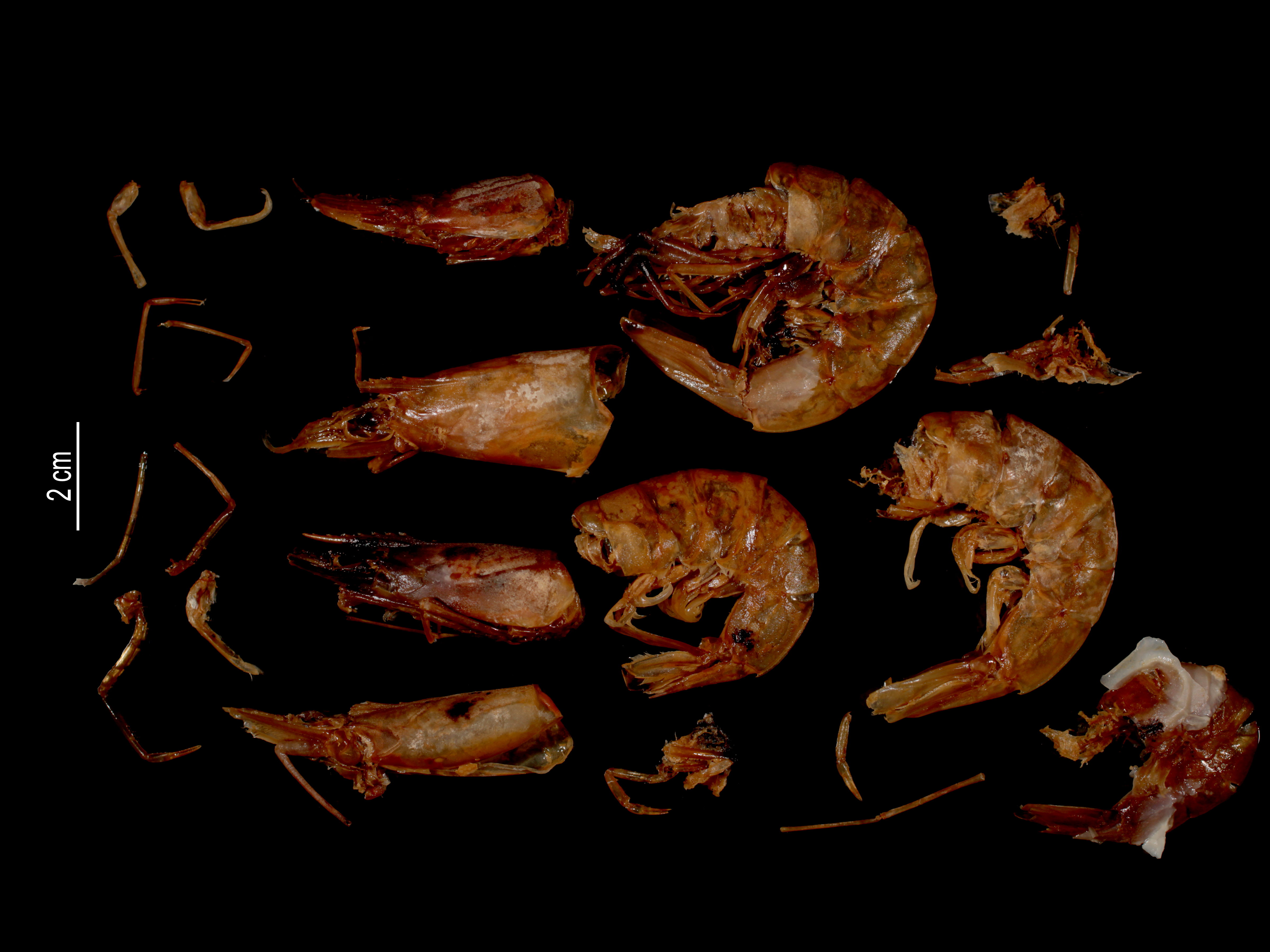 © Laura Flamme; MNHN, CC BY 4.0, via Wikimedia Commons · CC BY 4.0
|
-
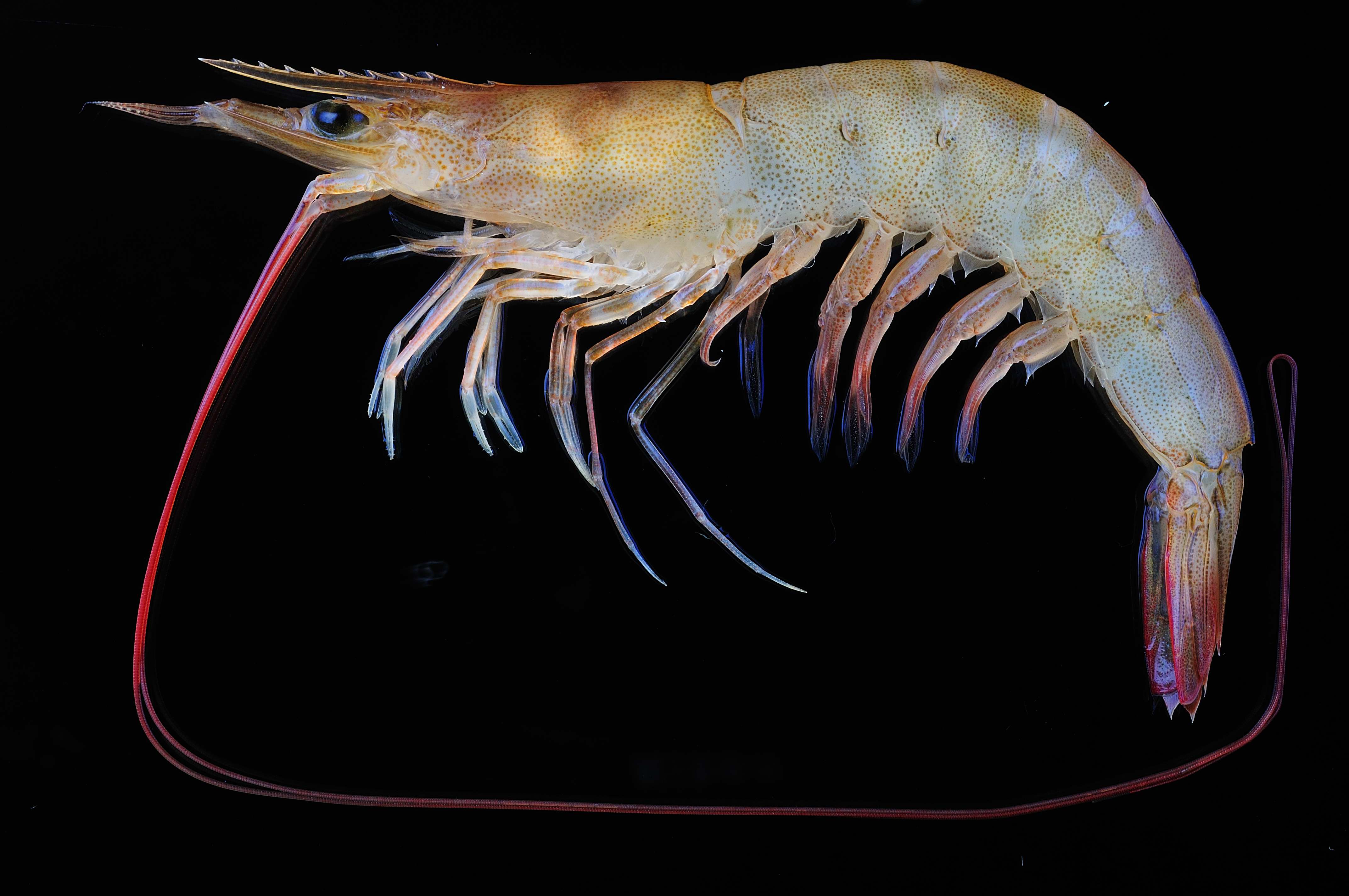 © Chan T. Y. & Lin C. W.; MNHN, CC BY 4.0, via Wikimedia Commons · CC BY 4.0
|
Each has its own |
| Stable identifier
|
|
|
Each has its own |
| Taxonomic rank
|
|
|
Same |
| Authority and year
|
|
|
Differs |
| English name
|
The register holds no verified English name for this taxon.
|
|
Only the second has a record |
| Nationally approved Arabic name
|
No nationally approved Arabic name exists for this taxon; verified local names are shown in the next two rows, as what they are.
|
No nationally approved Arabic name exists for this taxon; verified local names are shown in the next two rows, as what they are.
|
Neither has a record |
| Local name — Red Sea
A name recorded for this sea; it is not an occurrence record. |
No verified local name is recorded for the Red Sea.
|
No verified local name is recorded for the Red Sea.
|
Neither has a record |
| Local name — Arabian Gulf
A name recorded for this sea; it is not an occurrence record. |
No verified local name is recorded for the Arabian Gulf.
|
No verified local name is recorded for the Arabian Gulf.
|
Neither has a record |
| Family
|
|
|
Same |
| Order
|
|
|
Same |
| National code
|
This record carries no national code.
|
This record carries no national code.
|
Neither has a record |
| Measured specimen length
The length of a measured specimen, not the maximum length of the species. |
The register holds no measured specimen length.
|
The register holds no measured specimen length.
|
Neither has a record |
| Published conservation status
|
No conservation assessment is published for this record.
|
No conservation assessment is published for this record.
|
Neither has a record |
| Distribution
|
-
Saudi Arabian Gulf coast: preserved specimens held by the Smithsonian National Museum of Natural History (USNM) and published through GBIF, among them Manifa Bay (1982), Oqair Bay (1974), Manifa (1971). The GBIF records give Isabel Pérez Farfante as the determiner. Museum specimen records: not an estimate of abundance and not a statement about the species today.
Saudi territorial waters, Arabian Gulf
Reference 114 — Occurrence record · verified
the evidence is a rendering of what the locator holds, not a verbatim quotation
Reference 115 — Occurrence record · verified
the evidence is a rendering of what the locator holds, not a verbatim quotation
Reference 116 — Occurrence record · verified
the evidence is a rendering of what the locator holds, not a verbatim quotation
-
According to the FAO sheet (1983): within the area it occurs in the “Gulf” and the Arabian Sea from the Gulf of Oman to south India, and in Sri Lanka; further east as far as the Philippines and Taiwan Island. A regional statement; the Saudi record of the species is the specimens named above.
Reference 110 — Metapenaeus affinis sheet: geographical distribution · verified
the evidence is a rendering of what the locator holds, not a verbatim quotation
|
-
Metapenaeus monoceros is the second most abundant commercially important shrimp species caught along the Saudi Arabian Red Sea coast … fishery-independent samples collected from shrimp trawling grounds off Al Qunfudhah and Jizan (October 2022–September 2023). Altogether, 10,859 specimens were examined.
Saudi territorial waters, Red Sea
Reference 12 — Abstract · verified
the evidence is a rendering of what the locator holds, not a verbatim quotation
-
According to the FAO sheet (1983): occurs throughout the area from South Africa to south India, including the Red Sea, Madagascar, Mauritius, La Réunion and Sri Lanka, but is “absent from the Gulf”; further east as far as the Malay Peninsula; it has entered the eastern Mediterranean through the Suez Canal. A regional statement; no range on the Saudi Gulf coast is attributed to the species.
Reference 110 — Metapenaeus monoceros sheet: geographical distribution · verified
the evidence is a rendering of what the locator holds, not a verbatim quotation
|
Differs |
| Morphology
|
-
According to the FAO identification sheet (western Indian Ocean, 1983): generally almost the entire body pubescent (rarely partly or completely hairless); rostrum with 8 to 11 teeth along the entire dorsal margin, slightly sinuous; telson armed only with spinules; an ischial spine on the first pereopod. Colour: body pale greenish to pale pinkish, sometimes green-bluish or pink-brownish, with green or red-brown specks; antennae red. A description for the western Indian Ocean (FAO Area 51), not a Saudi study.
Reference 110 — Metapenaeus affinis sheet: distinctive characters · verified
the evidence is a rendering of what the locator holds, not a verbatim quotation
|
-
According to the FAO identification sheet (western Indian Ocean, 1983): almost the entire body is pubescent (in East Africa, except the Red Sea, the pubescence is restricted to the dorsal part of the carapace and abdominal patches); rostrum with 9 to 12 teeth along the entire dorsal margin, straight, reaching as far as or beyond the tip of the antennular peduncle; telson armed only with spinules; a small ischial spine on the first pereopod. Colour: body pink, green-greyish or whitish with brown specks; antennae red. A description for the western Indian Ocean (FAO Area 51), not a Saudi study.
Reference 110 — Metapenaeus monoceros sheet: distinctive characters · verified
the evidence is a rendering of what the locator holds, not a verbatim quotation
|
Differs |
| Habitat and distribution
|
-
According to the FAO sheet (1983): found from the coast to depths of about 55 m (occasionally deeper, to 90 m), mainly on mud or sandy-mud; juveniles live in estuaries and backwaters. A description for the western Indian Ocean (FAO Area 51), not a Saudi study.
Reference 110 — Metapenaeus affinis sheet: geographical distribution and behaviour · verified
the evidence is a rendering of what the locator holds, not a verbatim quotation
|
-
According to the FAO sheet (1983): usually found from the coast to about 70 m (fished down to 170 m in an exploratory survey off Pakistan), mainly on mud, sandy-mud or silt; juveniles live in estuaries and backwaters or close to the shore. A description for the western Indian Ocean (FAO Area 51), not a Saudi study.
Reference 110 — Metapenaeus monoceros sheet: geographical distribution and behaviour · verified
the evidence is a rendering of what the locator holds, not a verbatim quotation
|
Differs |
| Identity and names
|
-
Accepted name in the World Register of Marine Species (WoRMS): Metapenaeus affinis (H. Milne Edwards, 1837), an accepted species in its own right and not a synonym of Metapenaeus monoceros.
Reference 14 — AphiaRecordsByName, retrieved 17 October 2026 · verified
the evidence is a rendering of what the locator holds, not a verbatim quotation
|
The register holds no row for this field.
|
Only the first has a record |
| Carapace length (observed range)
|
The register holds no row for this field.
|
-
7.98 – 49.1 mm
Saudi territorial waters, Red Sea
Reference 12 — Table 1 (Results 3.1–3.2) · verified
the evidence is a rendering of what the locator holds, not a verbatim quotation
-
7.98 – 49.1 mm
Saudi territorial waters, Red Sea
Reference 12 — Table 1 (Results 3.1–3.2) · verified
the evidence is a rendering of what the locator holds, not a verbatim quotation
-
8.4 – 37.56 mm
Saudi territorial waters, Red Sea
Reference 12 — Table 1 (Results 3.1–3.2) · verified
the evidence is a rendering of what the locator holds, not a verbatim quotation
|
Only the second has a record |
| Body weight
|
The register holds no row for this field.
|
-
0.41 – 41.28 g
Saudi territorial waters, Red Sea
Reference 12 — Table 1 (Results 3.1–3.2) · verified
the evidence is a rendering of what the locator holds, not a verbatim quotation
-
0.41 – 41.28 g
Saudi territorial waters, Red Sea
Reference 12 — Table 1 (Results 3.1–3.2) · verified
the evidence is a rendering of what the locator holds, not a verbatim quotation
-
0.46 – 25.88 g
Saudi territorial waters, Red Sea
Reference 12 — Table 1 (Results 3.1–3.2) · verified
the evidence is a rendering of what the locator holds, not a verbatim quotation
|
Only the second has a record |
| Asymptotic length (L∞)
|
The register holds no row for this field.
|
-
50.66 mm
Saudi territorial waters, Red Sea
Reference 12 — Results 3.5 · verified
the evidence is a rendering of what the locator holds, not a verbatim quotation
-
38.97 mm
Saudi territorial waters, Red Sea
Reference 12 — Results 3.5 · verified
the evidence is a rendering of what the locator holds, not a verbatim quotation
|
Only the second has a record |
| Growth coefficient (K)
|
The register holds no row for this field.
|
-
0.35 /yr
Saudi territorial waters, Red Sea
Reference 12 — Results 3.5 · verified
the evidence is a rendering of what the locator holds, not a verbatim quotation
-
0.55 /yr
Saudi territorial waters, Red Sea
Reference 12 — Results 3.5 · verified
the evidence is a rendering of what the locator holds, not a verbatim quotation
|
Only the second has a record |
| Total mortality (Z)
|
The register holds no row for this field.
|
-
2.38 /yr
Saudi territorial waters, Red Sea
Reference 12 — Results 3.5 · verified
the evidence is a rendering of what the locator holds, not a verbatim quotation
-
3.65 /yr
Saudi territorial waters, Red Sea
Reference 12 — Results 3.5 · verified
the evidence is a rendering of what the locator holds, not a verbatim quotation
|
Only the second has a record |
| Natural mortality (M)
|
The register holds no row for this field.
|
-
0.96 /yr
Saudi territorial waters, Red Sea
Reference 12 — Results 3.5 · verified
the evidence is a rendering of what the locator holds, not a verbatim quotation
-
1.45 /yr
Saudi territorial waters, Red Sea
Reference 12 — Results 3.5 · verified
the evidence is a rendering of what the locator holds, not a verbatim quotation
|
Only the second has a record |
| Fishing mortality (F)
|
The register holds no row for this field.
|
-
1.42 /yr
Saudi territorial waters, Red Sea
Reference 12 — Results 3.5 · verified
the evidence is a rendering of what the locator holds, not a verbatim quotation
-
2.2 /yr
Saudi territorial waters, Red Sea
Reference 12 — Results 3.5 · verified
the evidence is a rendering of what the locator holds, not a verbatim quotation
|
Only the second has a record |
| Exploitation rate (E)
|
The register holds no row for this field.
|
-
0.6
Saudi territorial waters, Red Sea
Reference 12 — Results 3.6 · verified
the evidence is a rendering of what the locator holds, not a verbatim quotation
|
Only the second has a record |
| Size at first maturity
|
The register holds no row for this field.
|
-
21.12 mm
Saudi territorial waters, Red Sea
Reference 12 — Results 3.3 (95% CI 20.91–21.29 mm) · verified
the evidence is a rendering of what the locator holds, not a verbatim quotation
|
Only the second has a record |
| Spawning potential ratio
|
The register holds no row for this field.
|
-
0.23
Saudi territorial waters, Red Sea
Reference 12 — Results 3.6; Figure 6 · verified
the evidence is a rendering of what the locator holds, not a verbatim quotation
|
Only the second has a record |
| Sex ratio
|
The register holds no row for this field.
|
-
1.56 females to 1 male
Saudi territorial waters, Red Sea
Reference 12 — Results 3.3 · verified
the evidence is a rendering of what the locator holds, not a verbatim quotation
|
Only the second has a record |
| Spawning period
|
The register holds no row for this field.
|
-
Continuous year-round with a February to May peak
Saudi territorial waters, Red Sea
Reference 12 — Discussion (peak February–May) · verified
the evidence is a rendering of what the locator holds, not a verbatim quotation
|
Only the second has a record |
| Recruitment period
|
The register holds no row for this field.
|
-
Young individuals abundant from June to September
Saudi territorial waters, Red Sea
Reference 12 — Discussion (June–September) · verified
the evidence is a rendering of what the locator holds, not a verbatim quotation
|
Only the second has a record |
| Codend mesh size
|
The register holds no row for this field.
|
-
40 mm
Saudi territorial waters, Red Sea
Reference 12 — Methods 2.1–2.2 (38 mm regulated minimum) · verified
the evidence is a rendering of what the locator holds, not a verbatim quotation
|
Only the second has a record |
| General description
|
The register holds no row for this field.
|
-
Maximum total length (TL) printed by the FAO sheet (1983): males 15 cm, females 20 cm. It is a maximum recorded total length, not a common size and not a measurement made in Saudi waters; the Saudi measurements on this page are carapace lengths and are shown separately.
Reference 110 — Metapenaeus monoceros sheet: size · verified
the evidence is a rendering of what the locator holds, not a verbatim quotation
|
Only the second has a record |
| Study sample count
|
The register holds no row for this field.
|
-
10859
Saudi territorial waters, Red Sea
Reference 11 — Results 3.1 (species composition, n = 103,758 individuals, shares by number) · verified
|
Only the second has a record |
| Share of the study sample
|
The register holds no row for this field.
|
-
10 %
Saudi territorial waters, Red Sea
Reference 11 — Results 3.1 (species composition, n = 103,758 individuals, shares by number) · verified
|
Only the second has a record |
| Sources
|
-
Reference 14 — World Register of Marine Species, 2026
-
Reference 110 — FAO Species Identification Sheets for Fishery Purposes: Western Indian Ocean (Fishing Area 51), Penaeidae sheets, 1983
-
Reference 114 — GBIF occurrence 1322815946: Metapenaeus affinis, Manifa Bay, 1982, specimen of the Smithsonian National Museum of Natural History (USNM), 1982
-
Reference 115 — GBIF occurrence 1319228461: Metapenaeus affinis, Oqair Bay, 1974, specimen of the Smithsonian National Museum of Natural History (USNM), 1974
-
Reference 116 — GBIF occurrence 1318200524: Metapenaeus affinis, Manifa, 1971, specimen of the Smithsonian National Museum of Natural History (USNM), 1971
|
-
Reference 11 — Linking Biological Parameters to Fishery Management: Stock Assessment of Green Tiger Prawn, Penaeus semisulcatus De Haan, 1844 Along the Red Sea Coast of Saudi Arabia, 2025
-
Reference 12 — Life History Traits and Fishery Dynamics of Speckled Shrimp, Metapenaeus monoceros (Fabricius, 1798), Along the Saudi Arabian Red Sea Coast, 2025
-
Reference 14 — World Register of Marine Species, 2026
-
Reference 15 — ASFIS List of Species for Fishery Statistics Purposes, 2026 edition, 2026
-
Reference 110 — FAO Species Identification Sheets for Fishery Purposes: Western Indian Ocean (Fishing Area 51), Penaeidae sheets, 1983
|
Differs |